
The Awakening on the Hooghly - Hindu Consolidation and the Making of an Unstoppable Force in Bengal.
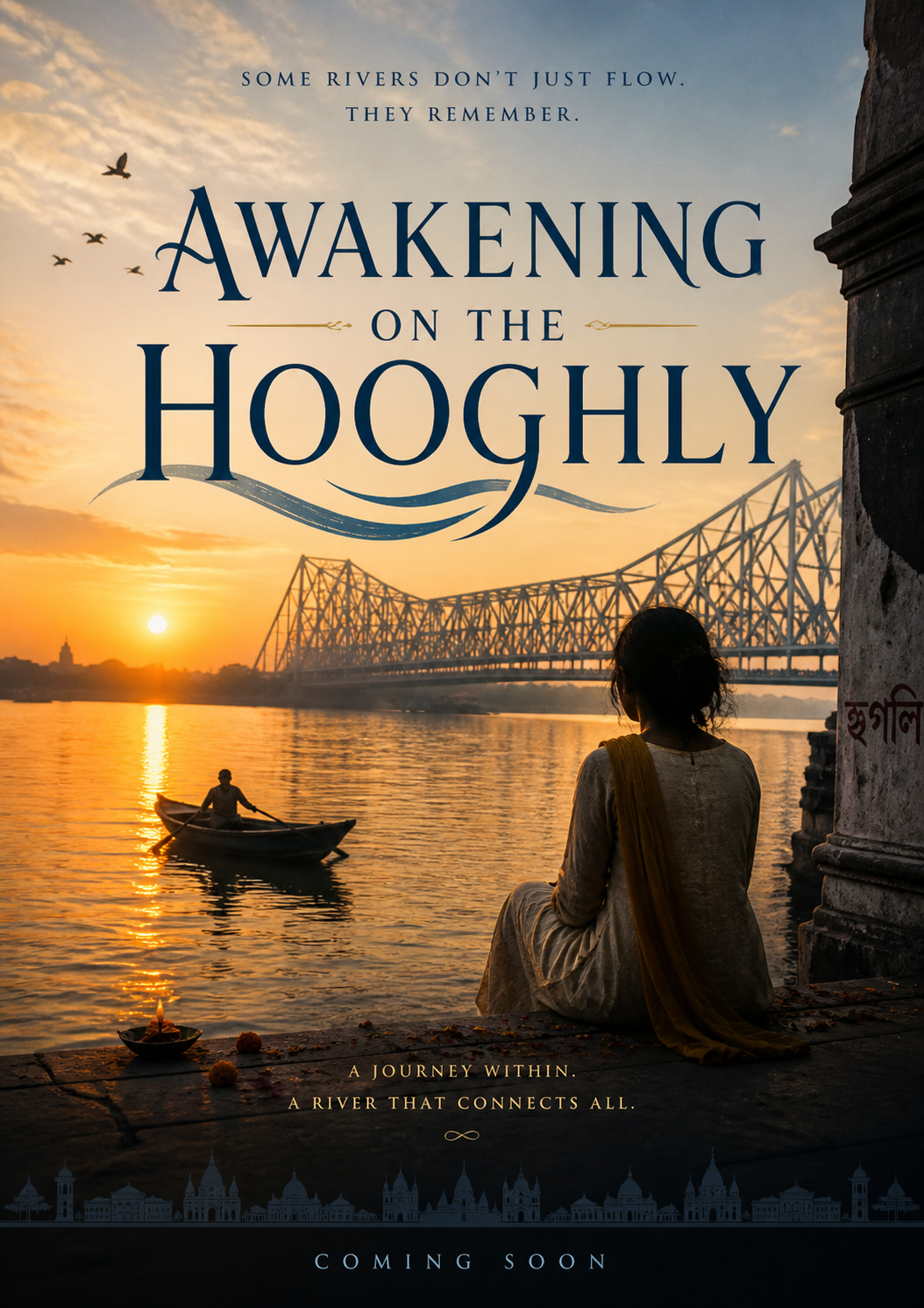
In the shadow of the Howrah Bridge, where the Hooghly once carried the dreams of a renaissance that birthed modern India, Bengal has spoken again. On May 4, 2026, as the Election Commission tallied the votes from an assembly election that saw a record turnout of over 92 per cent, the Bharatiya Janata Party crossed the Rubicon. With 207 seats out of 294, it has not merely defeated the Trinamool Congress; it has ended fifteen years of Mamata Banerjee’s rule and, more profoundly, rewritten the political grammar of a state that was once the laboratory of both Hindu cultural resurgence and its subsequent eclipse.
This is no ordinary electoral triumph. It is the visible manifestation of what can only be called a Hindu awakening- a quiet, subterranean consolidation of identity that has turned the BJP into an unstoppable force not just in Bengal, but in the larger narrative of Indian democracy.
To understand this moment, one must return to the banks of the same river that witnessed Bankim Chandra Chattopadhyay compose Vande Mataram and Swami Vivekananda thunder at the World Parliament of Religions. Bengal, in the 19th and early 20th centuries, was the intellectual cradle of Hindu reform and nationalist assertion. It produced giants who saw no contradiction between Sanatan Dharma and modernity. Yet Partition in 1947, followed by decades of Left Front rule that treated Hindu identity as a political embarrassment, and then the Trinamool’s decade-and-a-half of what many perceived as calibrated minority appeasement, created a deep psychological siege. Temples were attacked during festivals, processions were blocked, and a sense of cultural siege grew in silence. The RG Kar hospital horror, the Sandeshkhali allegations, the visible demographic shifts in border districts - these were not mere campaign talking points. They were the raw material that forged a Hindu vote that refused, this time, to stay fragmented.
The numbers tell the story with clinical precision. In 2021, the BJP had won 77 seats with roughly 38 per cent of the vote. In 2026, it has surged to 207 seats and a vote share approaching 46 per cent. The Trinamool has been reduced to 80-odd seats. Suvendu Adhikari, the man who once stood beside Mamata and now leads the charge against her, put it bluntly on counting day: “There has been a Hindu consolidation.” It was not rhetoric. Exit polls and post-poll surveys confirmed what the BJP had long argued: in constituencies where Hindu voters had previously split between Congress, Left remnants, and even Trinamool out of habit or fear, they coalesced this time behind the lotus.
Adivasi pockets in the Jangalmahal and North Bengal added their weight, but the decisive swing came from the Hindu heartland—rural Nadia, the 24 Parganas, the industrial belts where economic despair met cultural assertion.
What makes this consolidation unstoppable is its structural depth. For years, the BJP’s critics dismissed its Bengal strategy as an import from the Hindi heartland, an alien Hindutva grafted onto a syncretic Bengali soil. The party’s own evolution proved otherwise. It blended cultural nationalism with Bengali pride - invoking Tagore and Subhas Bose alongside Ram and Durga Puja processions. It promised industrial revival and jobs while addressing the security anxieties along the Bangladesh border.
Above all, it offered dignity to a community that felt its festivals, its festivals, its temples, and its very sense of self had been held hostage to vote-bank politics. The result is a political realignment that mirrors what happened in Uttar Pradesh or Gujarat earlier, but with a distinctly eastern flavour. The BJP is now in power from the Himalayas to the Bay of Bengal—a contiguous saffron corridor that was once unthinkable.
Critics will, of course, cry polarisation. They always do. Yet polarisation is a two-way street. When one side consolidates on the basis of perceived majoritarianism, the other has long consolidated on the basis of minority insecurity. The difference this time is that the Hindu vote, long dismissed as divided and docile, has finally found its arithmetic and its nerve. Record turnout was not the handiwork of the Election Commission alone; it was the roar of a sleeping giant stirring. In village after village, the same people who once feared social ostracism for displaying a saffron flag now wore it openly. The awakening is not merely electoral; it is civilisational.
M.J. Akbar once wrote in India: The Siege Within about the fault lines that run through the Indian republic - fault lines of identity that no amount of secular incantation could erase. Bengal’s verdict is a chapter in that continuing story. The Trinamool’s defeat is not just anti-incumbency; it is the exhaustion of a model that treated Hindu identity as the problem rather than the solution. The BJP’s victory, by contrast, signals the arrival of a new equilibrium: development married to cultural self-confidence.
History rarely repeats itself, but it does rhyme. The Bengal that once led the charge against colonial rule through Hindu cultural revival has now, in the 21st century, delivered a mandate that echoes its own forgotten roots. The force unleashed is not temporary. It is the consolidation of a people who have decided, after decades of drift, that their civilisation matters. And in that decision lies the unstoppable momentum that has carried the BJP to power on the Hooghly. The river flows on, but the tide has turned.
Views expressed by
Jaya Aditya Pinnapureddy
Designation :National Advisor India Centre for Policy Research and Devolopment
Comments
Your Comment