Congress Narrative vs Reality: Politics Over Principles?”
For decades, the Indian National Congress has positioned itself as the guardian of social justice, women’s rights, and democratic values. But when tested on crucial reforms, a clear gap emerges between what is claimed and what is practiced.
Let’s separate myth from reality.
Myth 1: “Congress stands for women empowerment”
Reality: If that were true, the long-pending Women’s Reservation Bill would have been implemented during their decades in power. Instead, it remained a promise on paper. Today, when reforms are finally pushed forward, resistance is being framed as “concern.” The question is simple: Why wasn’t this urgency shown earlier?
Myth 2: “Congress supports equal representation”
Reality: On delimitation, Congress has taken a contradictory stand, raising fears instead of explaining facts. Delimitation is a constitutional exercise to ensure equal representation based on population. Opposing it indirectly means supporting unequal weight to votes. Democracy cannot run on outdated numbers.
Myth 3: “Congress promotes internal democracy”
Reality: Leadership within the party has largely remained concentrated within a single family ecosystem. Decision-making often appears centralized rather than democratic. The contradiction is clear: demand democracy nationally, but limit it internally.
Myth 4: “Congress is against divisive politics”
Reality: On issues like delimitation, narratives such as “North vs South” are amplified, not resolved. Instead of strengthening unity, such framing creates regional mistrust for political advantage. National issues are being turned into regional debates.
Myth 5: “Congress opposes policies only on merit”
Reality: Many policy objections appear timing-based and politically convenient rather than principle-driven. When out of power, reforms are opposed. When in power, the same ideas are delayed. Is opposition about policy or politics?
Myth 6: “Congress is the voice of accountability”
Reality: Accountability also means answering for missed opportunities during long years of governance. From delayed reforms to incomplete implementation, many structural issues remained unaddressed. Accountability cannot be selective.
This is not about one party versus another. It is about credibility in public life. When narratives consistently differ from actions, people begin to question intent.
Democracy demands:
Consistency
Transparency
Timely action
Myths cheptharu, reality marchestharu — idi Congress, DMK, TMC style politics.
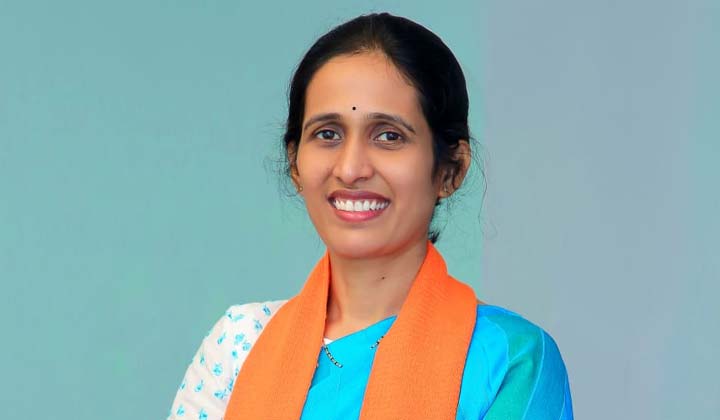
Written by: Akula Srivani
Corporator, Saroornagar
Comments
No comments yet. Be the first to comment.
Your Comment