
Tejasvi Surya comparison of Telangana State Formation Process
Recent remarks of Tejasvi Surya in Parliament on the process followed by Congress during Telangana state formation. It draws criticism from BRS and Congress party. But what actually Tejasvi Surya was referring to??
A brief note on the "process" followed by Congress govt during the formation of Telangana State:
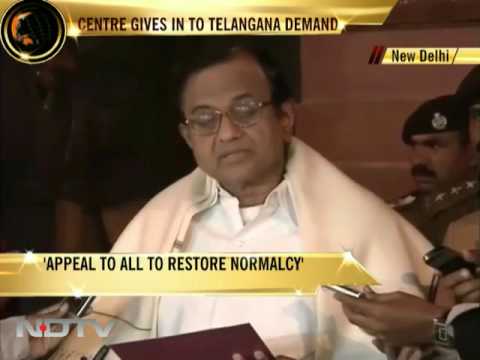
1. P Chidambaram's announcement
It began in December 2009 with a late-night announcement by Chidambaram stating that the “process of formation of Telangana has been initiated.”
This marked the first formal signal from the Centre after years of agitation.
2. Sri Krishna Committee (2009)
What followed was a phase of committees, reports, and delays.
The Sri Krishna Committee, appointed in 2010, submitted its report in 2011 outlining six possible solutions. Many of these were seen as either impractical or unfavourable to the aspirations of Telangana.
The most controversial aspect was the “Secret 8th Chapter”, which reportedly suggested ways to manage media and political narratives to suppress the statehood movement, triggering widespread backlash and distrust.
3. Period of deadlock (2011 – 2013)
For nearly two years after the report, there was little decisive action from the Centre.
This vacuum intensified the movement on the ground:
- The Sakala Janula Samme: A 42-day general strike that brought the region to a standstill
- The Million March: Massive protests in Hyderabad, including incidents like statue vandalism
- Sagara Haram: A large-scale human chain around Hussain Sagar
4. Antony Committee (August 2013)
After CWC cleared the path for Telangana state in July 2013, another committee was formed under A.K. Antony in August to handle rebellion with congress party and "handle" important issues such as status of Hyderabad, water sharing etc.
5. Drafting the bill (October 2013)
A Group of Ministers (GoM) headed by Sushilkumar Shinde was tasked with drafting the Andhra Pradesh Reorganisation Bill. How
Every constitutional process and consultative mechanism that is needed to be followed for drafting the bill was either bypassed, abused or conveniently ignored.
The bill was drafted behind closed doors, excluding the stakeholders and the bypassing the consultative machinery that is usually needed for a constitutional change.
6. Passage of the bill (February 2014)
The bill was then rammed through the parliament in February 2014, just weeks before the General Elections.
During the passage of the bill, the galleries were cleared, doors of the House were locked, and even the live telecast of Parliament was cut off during the passage of the bill.
In one of the most disgraceful moments in India’s parliamentary history, Congress MP Lagadapati Rajagopal sprayed pepper spray inside the Lok Sabha to stop the bill's introduction.
There was no clause-by-clause debate. Amendments proposed by several MPs were simply ignored or dismissed in the din. The bill was passed "as is," exactly how it came out of the GoM.
This has left massive legal gaps regarding the division of institutions and assets (Schedule IX & X) that remain unresolved even in 2026.
All this was a desperate act of electoral survival for Congress expecting gratitude from Telangana voters for 'gifting' Telangana state, which ultimately backfired during the 2014 Lok Sabha elections and people of Telangana rejected the congress lock, stock & barrel.
State formation under NDA in 2000
Compared to this, when states like Uttarakhand, Jharkhand, and Chhattisgarh were created in 2000 under the NDA, the process was much smoother because:
- The bills were drafted with collaborative input from all stakeholders.
- The parent state assemblies had passed unanimous resolutions in favour of the split.
Sacrifices for Telangana
None of this takes away from the immense sacrifices and sustained struggle of the people of Telangana.
The statehood movement spanned decades and saw:
- Loss of lives
- Student-led agitations
- Widespread public mobilisation
The demand for Telangana was rooted in genuine socio-economic and political grievances, and its eventual realization was the outcome of collective sacrifice and democratic assertion.
Statements by Tejasvi Surya:
Remarks by Tejasvi Surya must be understood in this entire context. His comparison was not about equating Telangana statehood with Partition in terms of outcomes, but about highlighting the manner in which the process was handled disorderly, rushed, and institutionally weak.
Critiquing how Telangana was formed is not the same as questioning why it was formed.
The legitimacy of the statehood movement and the flaws in its execution can coexist and acknowledging the latter is essential to understanding the unresolved issues that persist today.
The opinion is expressed by X user @sameermathad.
Comments
No comments yet. Be the first to comment.
Your Comment