Congress vs Citizens: How Congress Broke Its Promises to Telangana's RTCand the Deadly Price Being Paid.
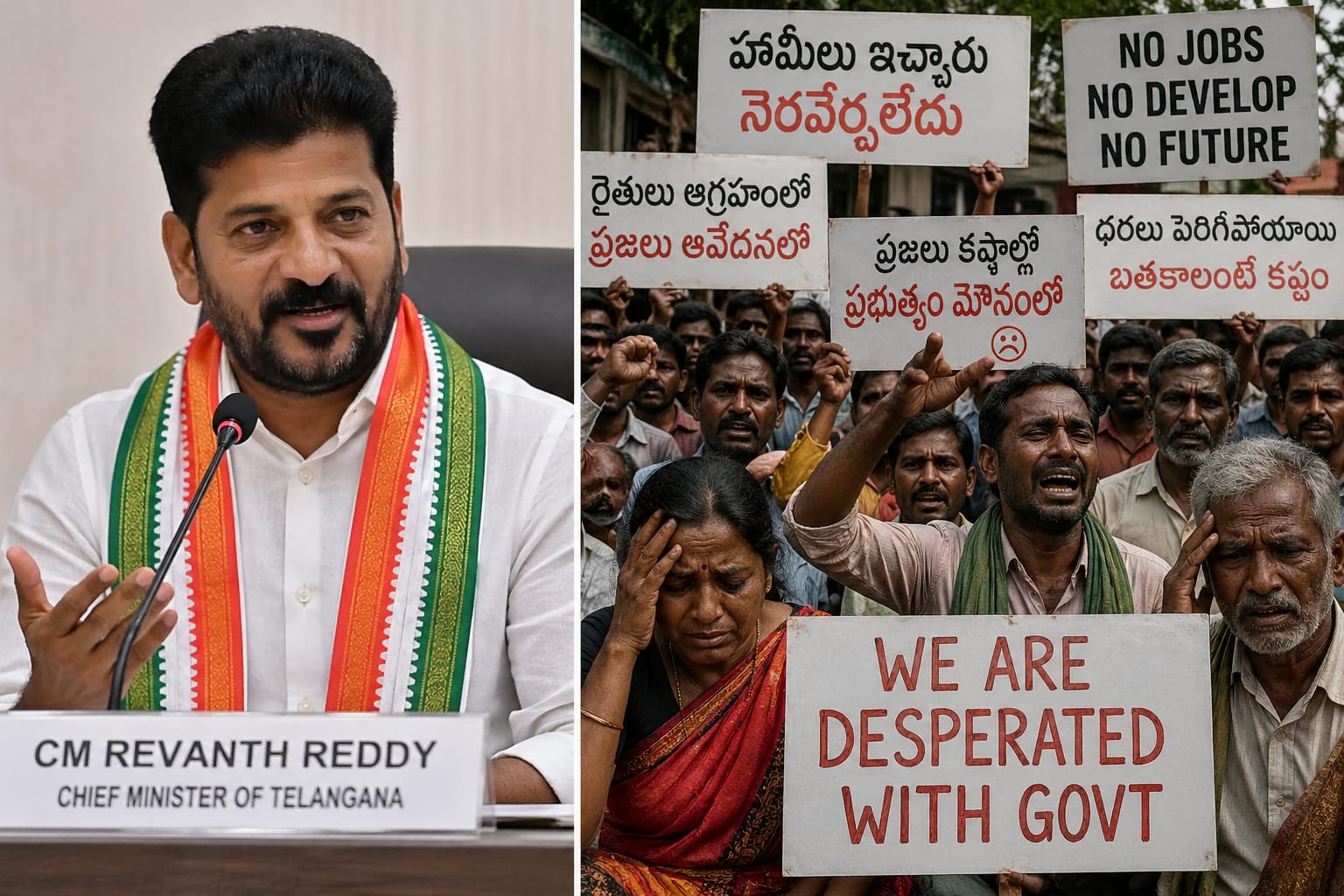
The Congress government in Telangana came to power in December 2023 on a bold manifesto that promised RTC workers a merger into government service, two pay revisions, union restoration, and clearance of all dues. Two and a half years later, not one promise was kept. After 41 days of silence following a strike notice, failed last-minute talks pushed 40,000 TGSRTC employees onto the streets from April 22, 2026, halting over 6,000 buses and stranding 60 lakh daily commuters across all 33 districts. Desperate workers resorted to extreme measures driver Shankar Goud, 55, set himself ablaze at the Narsampet bus stand and died from his burns, while two other drivers attempted suicide the same day in Bhadradri Kothagudem and Nalgonda. With trained drivers on strike, the government deployed untrained private drivers one of whom crashed an RTC bus into a truck in Karimnagar, injuring passengers. Villagers trekked long distances with no buses, private fares tripled, and even women covered under the Congress government's own Maha Lakshmi free travel scheme were left stranded and out of pocket. After marathon talks on April 24–25, the government agreed to key demands including merger, an 11% pay revision, and union elections but workers remain sceptical, having heard promises before. The TGSRTC strike is not just a labour dispute; it is the story of a government that chose to fight its own citizens rather than keep its word to them.
Two and a half years later, not one promise was implemented.
The TGSRTC Joint Action Committee (JAC) served a strike notice on March 13, 2026. The government waited 41 days until hours before the deadline to even sit down with union leaders. When talks finally happened, the government's offer was to form another committee and ask for four more weeks. Workers had heard that story before. They walked out.
From April 22, over 6,000 buses fell silent across all 33 districts of Telangana. The iconic Mahatma Gandhi Bus Station in Hyderabad was empty. The state's public transport had collapsed not because workers wanted to strike, but because the government refused to keep its word.
What Workers Were Asking For
The JAC's 32 demands were not radical. They were the Congress party's own election promises reflected back at them:
- Merger of TGSRTC into state government with full job security
- 2021 Pay Revision with 30% fitment and parity in the 2025 revision
- Clearance of ₹1,000 crore in pending Provident Fund and cooperative dues
- Clearance of ₹2,500 crore in long-standing arrears
- Stop privatisation of electric buses in Greater Hyderabad
- Union elections — still not held since the government came to power
"Their demands were not new," said JAC Vice-Chairman Thomas Reddy. "They were based on assurances in the manifesto."
While Congress boasted about spending ₹9,200 crore on the Maha Lakshmi free bus scheme for women, it paid RTC only ₹7,000 crore leaving a ₹2,200 crore shortfall that drivers and conductors were quietly absorbing. Meanwhile, the workforce shrank from 60,000 to 38,000, and private electric buses were being quietly inducted — what unions called the beginning of full privatisation.
A Driver Dies. Two Others Try to Follow.
No number captures the desperation of TGSRTC workers better than what happened on April 23.
Shankar Goud, 55, was a bus driver at the Narsampet depot in Warangal. Two years from retirement. Never owned a house. Had promised his daughter that his retirement benefits would secure her future. On that afternoon, as workers gathered in protest at the Narsampet bus stand, he poured petrol on himself and set himself ablaze.
Colleagues pulled him away and rushed him to hospital. He was later shifted to a super-speciality hospital in Hyderabad. He died at 1:30 am on April 24.
His wife Latha told reporters she had asked him to come home for lunch that day. He said food was arranged at the protest site. When she sensed something was wrong and called the depot, it was already too late. "He was our only support," she said. "What will happen to us now?"
The same day, two other RTC drivers attempted suicide one in Bhadradri Kothagudem who consumed pesticide, another in Nalgonda stopped by colleagues in time. Three men driven to the edge in a single day.
Even in death, Shankar Goud was denied dignity. His family asked to take his body to the Narsampet bus station so co-workers could pay their respects. Police refused, citing law and order. The refusal sparked national outrage.
The TGSRTC strike 2026 was not just a workers' crisis it was a public crisis. Sixty lakh daily commuters were stranded overnight. Students missed school. Daily wage workers lost income. Villages had no buses for days. Women who rely on the Maha Lakshmi free bus scheme suddenly had to pay autorickshaws charging two to three times the normal fare.
People climbed into jeeps, tractors, and private vans just to reach work. The government's showcase welfare scheme was rendered useless because there were no buses to ride.
Private Drivers, Real Danger
To keep some services running, TGSRTC management deployed hired private drivers on its buses. The consequences were immediate.
In Karimnagar, a bus operated by a private driver rammed into a truck on the Kothirampur bypass road while heading to Warangal. The bus then veered into a road divider. Multiple passengers were injured. Eyewitnesses blamed driver negligence an inexperienced person at the wheel of a heavy public bus on an unfamiliar route.
Trained RTC drivers spend years learning their routes and their vehicles. A last-minute hire does not. When governments put untrained hands on public buses, it is ordinary passengers — workers, students, the elderly — who pay the price.
Strike Called Off — But Is It Really Over?
After marathon talks on April 24–25, the government finally agreed to the key demands: merger of TGSRTC with the state government, an 11% pay revision, and union elections. Workers called off the strike.
But workers are watching carefully. A Government Order recognising RTC workers as government employees was issued in 2023 and never implemented. The Congress manifesto made these same promises and nothing happened for two and a half years.
The question is not whether the strike ended. The question is whether this time, the promise will actually mean something.
This is not just a labour dispute. This is a government that made promises to win votes, ignored them for two and a half years, watched a worker die in despair, and agreed only then to what it had already committed to in its own manifesto.
Shankar Goud died waiting for his government to keep its word. Telangana's RTC workers and the crores of citizens who depend on them every day deserve a government that governs. Not one that only acts when a man is already on fire.
Comments
Your Comment